Polynomiography

ANIMATION ON YouTube

The Rise of Polynomials: A polynomiograph of z3 - 1 coming to life through 3D animation (and music).

UPCOMING EVENTS

RECENT EVENTS

Conference 57th Annual
Western Illinois University
Mathematics Teachers Conference
Friday, March 28, 2008

Learn more about this year's conference.

Teacher Workshop A Teacher Workshop was hosted at Zimmerli Art Museum on December 7, 2007.

Get more information here.

Exhibition A Polynomiography Exhibition was displayed at the Rutgers Art Library on October 19 through November 20, 2007.

Invitation card [pdf] and poster [pdf] promoting the exhibition.

Girls Plus Math Camp at Western Illinois University, June 2007.

Educator's Workshop A unique workshop for middle and high school educators was held at Rutgers University on May 15th, 2007.

See this brochure (1.68 MB PDF) for full details.

NEWS

Site Updates! In addition to the current revisions, this site will continue to be revised with more artwork, news, and software coming soon.

New Book Announcement: "Polynomial Root-Finding and Polynomiography" by Bahman Kalantari. Coming Fall 2008.

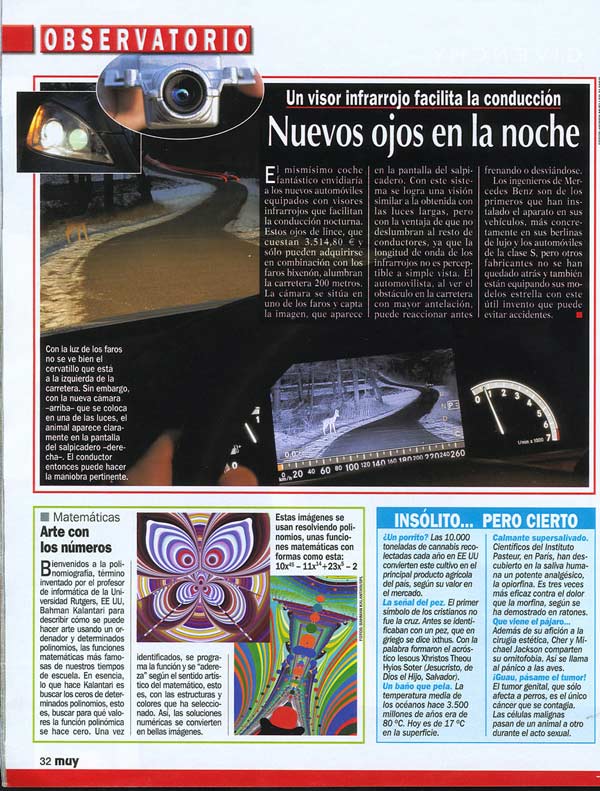
Article: Polynomiography is featured in the April 2007 edition of Muy Intersante. Spain's popular science magazine.

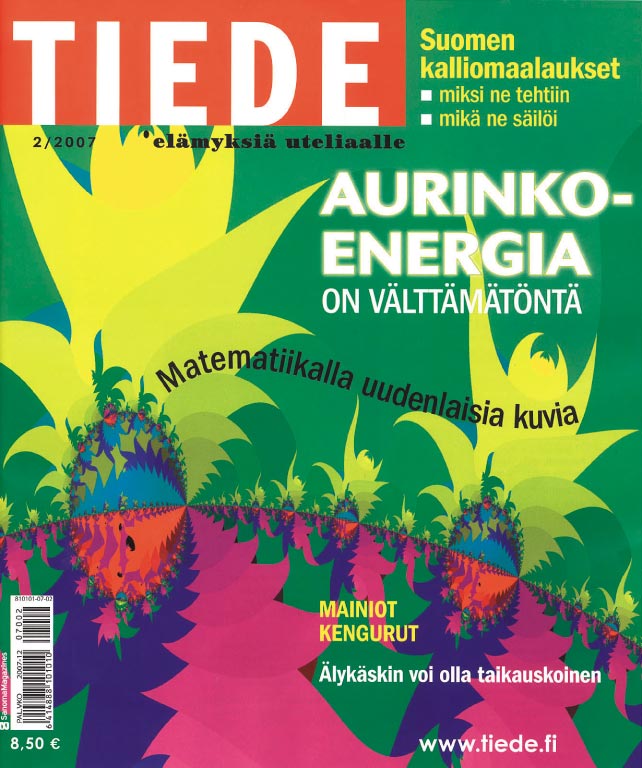
Cover: A polynomiograph featured on the February 2007 cover of the Finnish science magazine Tiede.

Cover: Kalantari's Polynomiography on the cover of Princeton University Press Mathematics Catalog [pdf]

Cover: Kalantari's Polynomiography on the cover of Princeton University Press book Fearless Symmetry: Exposing the Hidden Patterns of Numbers.

Exhibit: Kalantari's Polynomiography artwork part of traveling art-math exhibit in France and Greece.

NSF Review

An anonymous review on a proposal on polynomiography submitted to the National Science Foundation (NSF - ITR):

Root finding is indeed a hard field to make a splash in. Since the Sumarians, ancient Greeks, Isaac Newton, through Hermann Weyl and Stephen Smale, the best minds have given it a shot. I have taught the material in the classroom and have avoided the glitz associated with a lot of fractal geometry for fear of giving students less than what they need.

Well, I am now turning my head!

The global nature of the author's root finding algorithms and their simple interpretation in terms of Voronoi diagrams, Toeplitz forms, and basic calculus will force me to both revise my lectures and rethink how to most effectively use computers.

The [Principal Investigator] called the proposal an intersection between math and art. I find this an understatement in the following sense: It is interdisciplinary in the best sense of the word. That is it does not merely lie in the intersection of two fields but has the potential to make serious contributions to both. That is global algorithms for root finding and computer generated art. Not only are the tools exciting, but they are accessible to all. (Now I know what I can do this summer with the kids if I want to interest them in wonderful mathematics while they think they're having fun!)

This proposal represents a serious contribution to global root finding algorithms, computer generated art, and "bringing it all to the masses". It would be a shame not to fund it.